
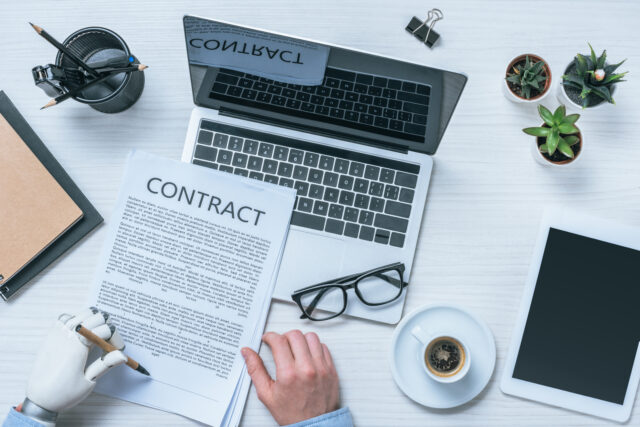
The Rise of AI in Business Contracts—But Is It Safe for Your Business?
Artificial intelligence is revolutionizing many industries, and contract drafting in the legal industry is no exception. With AI-powered tools offering nearly instant contract generation, businesses can now create legally binding agreements in seconds—often for free.
But you should ask yourself, is relying on AI-generated contracts a smart move or a legal disaster waiting to happen? Unfortunately, the answer is the stereotypical lawyer answer: it depends.
AI can be a cost-effective solution, but many business owners are unaware of the hidden legal risks that come with using AI to draft contracts. A simple mistake—such as missing (or misunderstanding) a key clause or failing to comply with state-specific laws—can leave your business exposed to lawsuits, financial loss, or contract disputes.
This guide breaks down the legality of AI-generated contracts, their potential risks, and how to ensure your contracts actually protect your business.
Are AI-Generated Contracts Legally Binding?
The short answer is yes—but with conditions, and that sword cuts both ways.
A contract, whether drafted by AI or a human, is legally binding if it meets the four basic contract requirements:
- Offer – One party makes a proposal.
- Acceptance – The other party agrees to the terms.
- Consideration – Both parties exchange something of value (e.g., money, services).
- Legality – The contract does not involve illegal activities or provisions that are unenforceable.
AI-generated contracts can fulfill these requirements, but there’s a major caveat:
AI does not have legal judgment. At this point in time, it may not be able to assess state-specific laws, especially case law, industry regulations, or unique business needs. This means an AI-drafted contract may be technically valid but still unenforceable due to missing critical terms or improper wording. Worse, it could be enforceable, but if you don’t know how to figure out what you might be missing or some terms may actually work against you, then you could create a situation where the tide turns against you at the worst possible time. Let’s discuss some of these issues here below.
The Risks of Using AI-Generated Contracts
While AI tools offer convenience, they come with significant legal risks.
1. Contracts May Be Missing Key Protections
AI-generated contracts are based on pre-existing templates, meaning they might not cover essential legal protections specific to your business.
Risk Example:
An AI-generated contract might fail to include an indemnification clause, or have a clause that is written for the benefit of the other side, leaving your business liable for damages caused by a third party’s negligence.
2. AI Can Misinterpret Legal Language
Legal language is nuanced, and AI does not fully grasp contract law yet the way an attorney does. This can lead to ambiguities and misinterpretations that could render your contract unenforceable in court.
Risk Example:
A business using an AI-generated employment contract failed to include state-required non-compete limitations, leading to a legal challenge from a former employee.
3. Compliance Issues with State and Federal Laws
AI does not automatically adjust contracts to meet state-specific regulations. Many contracts need to be customized based on where your business operates.
Risk Example:
A California business using an AI-generated independent contractor agreement failed to comply with AB5 regulations, resulting in fines and reclassification of workers as employees.
4. No Legal Recourse if Something Goes Wrong
If an AI-generated contract fails to protect you, there is no entity to hold accountable—unlike when working with a legal professional.
Risk Example:
A business discovered that an AI-generated vendor contract failed to include a termination clause, forcing them to continue working with an unreliable supplier.
5. Confidentiality and Data Privacy Concerns
Many AI contract generators store and use uploaded contract data, raising concerns about business confidentiality and data security.
Risk Example:
A company uploaded proprietary business details into an AI contract tool, only to later find similar contract language appearing in other publicly available templates.
When Can AI Contracts Be Used Safely?
AI-generated contracts might be useful for:
✔ Basic agreements (e.g., non-disclosure agreements, simple service contracts).
✔ Internal use documents (e.g., employee handbooks, non-critical policy guidelines).
✔ Idea drafting—using AI as a starting point before consulting an attorney.
However, for high-value agreements, contracts involving employees, business partnerships, or intellectual property, or any legally complex arrangement, having a legal professional review the contract is essential.
How to Ensure Your Contracts Are Legally Sound
If you choose to use AI for contract drafting, take these steps to minimize risk:
- Use AI as a starting point, not the final contract.
- Using AI to help you get the key terms on paper will be helpful to clarifying the deal.
- BUT AI-generated contracts should be reviewed and customized before signing.
- Check for state-specific legal requirements.
- Ensure the contract aligns with your state’s business laws.
- Add essential protections like:
- Indemnification clauses (shifting liability where necessary).
- Dispute resolution terms (how conflicts will be handled).
- Termination clauses (to avoid getting locked into bad agreements).
- Have a legal professional review AI-generated contracts.
- This ensures the contract is enforceable and protective of your business interests.
The Verdict: Should You Rely on AI for Contracts?
While AI-generated contracts can save time and money, they should not replace legal guidance.
When AI Works Well:
✔ Drafting simple agreements as a starting point.
✔ Automating routine, low-risk contracts.
When AI Fails:
❌ Creating complex business agreements without legal review.
❌ Drafting contracts without considering industry-specific laws.
❌ Handling high-value deals, intellectual property, or employment agreements.
If a contract impacts your business’s financial health, liability, or future growth, it’s best to have a legal expert review it before signing.
AI can assist, but it can’t replace professional legal judgment.
Need to Ensure Your Contracts Protect Your Business?
Before relying on AI-generated agreements, ensure they truly safeguard your business interests.
Hiatt Law offers contract drafting, review, and legal consultation services to help business owners avoid costly mistakes.
Schedule a consultation here or email us at [email protected] to get legally sound contracts that protect your business.